Sonderkommando Kattowitz


The Sonderkommando was formed in January 1944 and consisted of around ten prisoners operating out of the local Gestapo headquarters, originating from Poland, Czechoslovakia and the Soviet Union with some Germans. The prisoners were employed on building a long brick barrack for interrogations with an underground tunnel connecting the Gestapo HQ with a nearby villa and an air-raid shelter for the Gestapo. In January 1945, the prisoners were liberated by the Red Army.

The Sonderkommando was probably commanded by the local Gestapo chief, SS Obersturmbahnfuhrer Johannes Thummler and supervised by three low-level Gestapo officers. The guards were from Ukraine and could not speak German very well.
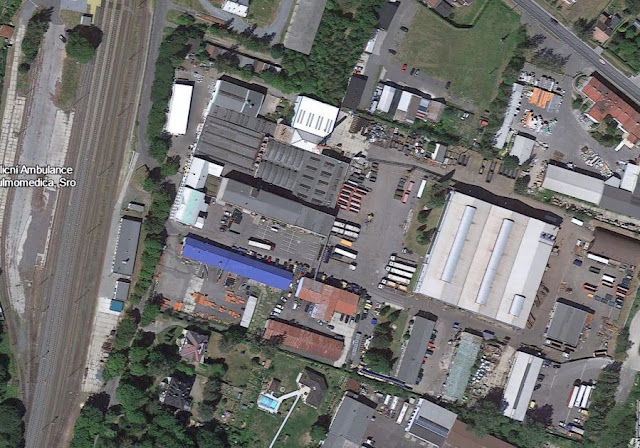
The prisoners were initially held in a cellar in the basement of the Gestapo HQ. They were subsequently moved to a shed in the engine room of the local brickworks located at ul Ceglana. At these brickworks, there was also a re-education camp for 40 Erziehungshäftlinge (re-education prisoners, who spent a short time in such camps before being released). Meals for the Sonderkommando were provided at the Gestapo HQ, so the brickworks were just used for night accommodation. These meals were brought by truck every 10 days, under the supervision of prisoner Antoni Szwajnoch and several guards. They consisted of bread, porridge, potatoes, margarine and other foodstuffs from the Auschwitz I depots. Dinners were cooked in the Gestapo HQ kitchen by civilian employees while the prisoners prepared breakfasts and lunches themselves.
The prisoners were marched under guard from the brickworks to the Gestapo HQ.


The former Gestapo HQ building is now occupied by the Specjalistycznych Klinik (Office of Provincial Specialist Clinics), situated along ul. Powstańców. It is a multi-storey neoclassical building with three wings, the entrance being in the front wing. The cells in the basement for the prisoners still exist. These cells were also used for other prisoners of the Gestapo.


Former prisoner Antoni Szwajnocha recalls:
“On January 20, 1944, after an evening roll call, I was bathing in the camp laundry when my number was called. Of course, I volunteered immediately to the Schreibstube in Block 24. I found there an SS-Arbeitsdienstführer named Müller and a Kapo of a group of masons (his name was Karl; I do not remember the surname [3]). I knew Karl from the period when I worked in the Neubau Kommando, and he valued my bricklaying skills. I was surprised by the call and did not realize what it meant. At that time 10 prisoners were selected (together with me). We were loaded into a prisoner transport vehicle called a “Mina” and transported to the Katowice headquarters of the Gestapo. In Katowice, the head of the Gestapo – Thümmler himself – spoke with us. We stood in the yard of the Gestapo building, when he approached us and then ordered the prisoners from Katowice to report (to him). The order was repeated three times, but no one reported. I did not know what it meant. To make sure I reported that I came from the vicinity of Katowice. Thümmler hit me so hard that I fell to the snow. I do not know why he did it, because I did not come from Katowice, the town of Brzozowice-Kamień can hardly be considered a suburb of Katowice. Thümmler turned to me, saying that he was making me responsible for the remaining prisoners, and if I escaped, I would be killed. As a professional, I was to be responsible for the work.”


Comments
Post a Comment