Bad Gandersheim

The site of the Brunshausen Sub-camp (Apparatebau, Plant A) lies in Brunshausen, an area North of the town of Bad Gandersheim situated in a shallow valley. Ernst Heinkel AG constructed a plant there for the manufacture of aircraft parts for the HE 219 night fighter. A subcamp was established to serve the factory in October 1944, although initially there were no actual facilities, with the monastery church on the NE of Brunshausen serving as accommodation. The building had been neglected and there were no beds, meaning that prisoners had to sleep on the floor on straw mattresses. It was also unheated and the windows were broken. This was the situation until January 1945 when a barracks camp was constructed immediately south of the plant. This consisted of three wooden barracks used for living quarters, with a fourth used as an infirmary. Both the plant and the camp was surrounded by a barbed-wire fence.


The first 200 prisoners arrived from Buchenwald on 2nd October 1944, with further transports arriving on 27th October, delivering around 333 prisoners from Dachau, and on 13th November bringing 50 prisoners from Sachsenhausen. This latter group may have already been involved in forced labour for the Heinkel plant in Oranienburg. The total number of prisoners held in Bad Gandersheim reached between 520 and 550, but none of them were Jewish. They appear to have been selected for their specific skills. Some of the prisoners were appointed by the SS as overseers, and some of these men were noted for their brutality.
The task of building the barracks camp was brutal, with work conducted in all weathers and including work at a local quarry. Other work was conducted in the tailor shop, cobblers and laundry. For this, more than 342,000 Reichsmarks were paid to the SS between October 1944 and February 1945.
Two prisoner-doctors were appointed by the SS - Russian Valentin Shevelev and Spaniard José Gomez – assisted by two orderlies. There was a high level of illness, with 65 prisoners affected by the end of January 1945. This was in addition to frequent accidents. One French prisoner died of pneumonia on 28th October, followed by 27 other deaths up to the camp’s evacuation. All but one of these prisoners were buried in the Salzberg Cemetery in Bad Gandersheim.
Two weeks before the construction of the subcamp, the Waffen-SS Supplementary Office (Ergänzungsamt) agreed that six members of the plant security could be transferred to the subcamp SS, provided they were ‘Reich Germans’, fully fit for duty and born in or after 1903. Additional guards were drawn from the Wehrmacht. Records show that in February 1945, the subcamp staff consisted of eight NCOs and 44 enlisted SS men as guards. SS-Unterscharführer Anton Przybylski was appointed as the first subcamp commander, succeeded by SS-Hauptscharführer Werner Dillenborger in November 1944. Dillenborger had previously been an Oberfeldwebel (Master Sergeant) in the Luftwaffe. SS guard Alber Jokussies and a former prisoner functionary were both sentenced in 1949 for killing a prisoner during the death march from the Bad Gandersheim subcamp. No other convictions were recorded.
The death march occurred in early April 1945, ordered by the regional NSDAP Gauleiter and Reich Defense Commissioner. 40 sick prisoners unable to march were shot in the nearby Cluser Forest and a group of Soviet prisoners were forced to bury them. The remaining 480 prisoners set out towards the Harz Mountains, but significant numbers of them were murdered during the march. Upon arrival at Bitterfeld, the surviving 180 prisoners boarded a train which took them via Dresden and Prague to Dachau concentration camp, arriving there on 27th April.
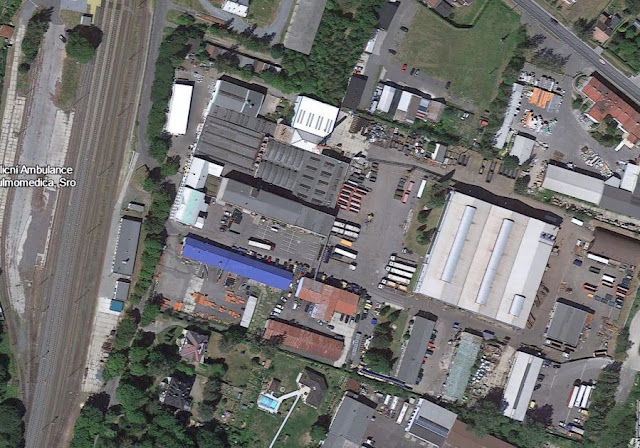
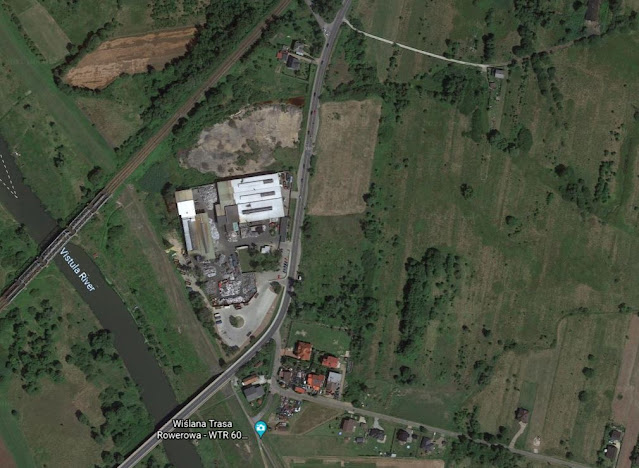
Residents of Bad Gandersheim were ordered to exhume the bodies buried in the Cluser Forest in summer 1945. These were reburied at the Salzberg Cemetery and a memorial stone there records the crime. Various other memorials have been added since then. No trace of the former subcamp remains at the site, which is now occupied by an industrial company.


Comments
Post a Comment